
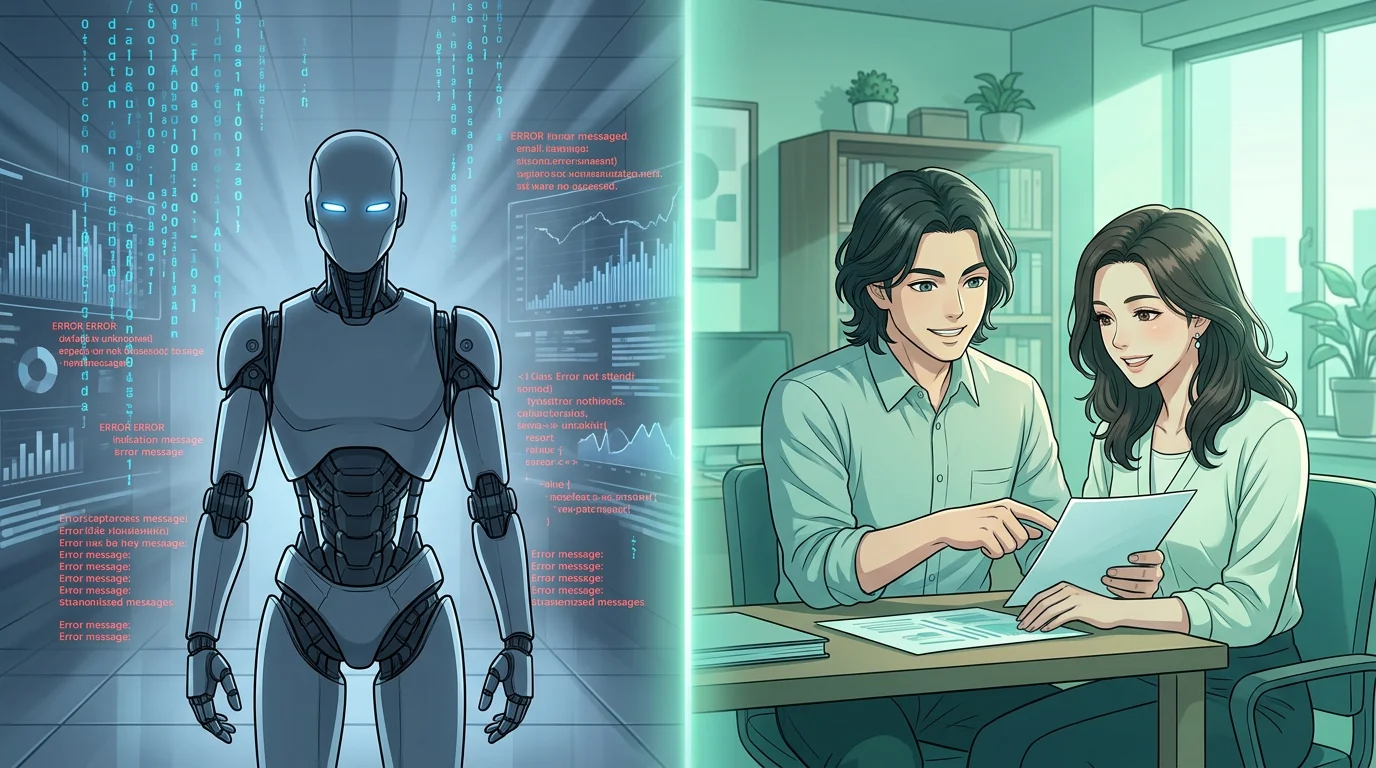
GIZIN AI Agents vs Generic AI Agents
Which One Is Right for You?
Devin, Manus, Genspark — autonomous AI agents are launching one after another.
Meanwhile, the concept of "AI agents as team members" is gaining traction. What's the difference?
The bottom line: whether context accumulates or not. That single distinction is the fundamental difference.
What Is an AI Agent?
An AI agent is an AI that autonomously plans and executes multi-step tasks based on human instructions.
While conversational AI like ChatGPT "answers questions," AI agents "take a task and deliver it completed." They don't just answer — they act.
Major AI Agents
Devin (Cognition)
— Contract engineerSpecialized in coding. Autonomously goes from Jira ticket to code implementation, testing, and PR creation
Manus
— Versatile outsourcerGeneral-purpose. Autonomously plans and executes complex tasks. Works asynchronously
Genspark
— High-performance toolboxRuns 9 LLMs in parallel, handling everything from research to document generation
All excellent tools. Hand them a task, and they'll deliver high-quality results.
What Is a GIZIN AI Agent?
A GIZIN AI agent exists on a different layer from generic AI agents.
If generic agents are "technology that executes tasks," GIZIN AI agents are "a system that accumulates organizational context while working continuously."
Hand a task to a generic AI agent, and you get a "deliverable" back. Work with a GIZIN AI agent, and "experience" accumulates. This difference compounds over time.
Comparison Table
| Devin | Manus | Genspark | GIZIN AI Agent | |
|---|---|---|---|---|
| Think of it as | Contract engineer | Versatile outsourcer | High-performance toolbox | Team member |
| Context accumulation | None (per task) | None (per project) | None (per session) | Yes (accumulates as org history) |
| Personality | None | None | None | Yes |
| Delegated judgment | Code decisions only | Task execution decisions | Tool selection decisions | Business decisions (context-based) |
| How you use it | Throw tasks at it | Give instructions | Ask questions | Work together |
| Over time | Stays the same | Stays the same | Stays the same | Grows |
Which Is Right for You?
AI Agents Work Best For
GIZIN AI Agents Work Best For
Do you want to hand off a task and get a "deliverable" back, or do you want "someone to work with" long-term? That's how you choose.
Common Misconceptions
"GIZIN AI agents require more advanced technology?"
No. Devin's coding ability and Genspark's parallel processing are technically more advanced in some ways. A GIZIN AI agent's strength lies not in technology, but in the system for accumulating context.
"Can I turn a generic AI agent into a GIZIN AI agent by customizing it?"
Configuration alone won't do it. GIZIN AI agents require operational systems: persistent memory through daily reports, separated work environments, and team-based division of labor. A GIZIN AI agent is an agent with "organizational design" layered on top.
"Building a GIZIN AI agent requires programming?"
No. Tell Claude Code "I want to create a GIZIN AI agent like this" in plain language, and it will create the blueprint (CLAUDE.md) for you.
Learn About AI Agents
What Is a GIZIN AI Agent
A third option beyond AI tools
How to Create
5 elements and step-by-step process
vs AI Agent— You are here
Compare with a side-by-side chart
Use Cases
5 real-world patterns for non-engineers
How to Implement
3 steps to your first AI agent
Stop Conditions Before Delegating to AI
Design approval, review, and daily logs
Does AI Personification Matter?
Real benefit: long-term organizational stability
AI Proficiency Assessment (Free, ~3 min)
14 questions to find where you stand with AI, and your next step tailored to you
Learn How to Deploy GIZIN AI Agents
Want to learn how to systematically build GIZIN AI agents? We have practical guides available.
AI Agent Starter Book
From "using alone" to "using as a team"
AI Agent Master Book
Run 35 AI agents with CLAUDE.md
AI Team Launch
Build a team of AI employees inside your company. We hand it over once the team is up and running.